SLA Optical Alignment & Precision Teardown
Executing component-level mechanical teardown, masking LCD replacement, optical path recalibration, and substrate alignment to resolve edge-case print failure modes.
// 01. SYSTEM OVERVIEW
Primary objective involved isolating and resolving non-deterministic failure modes on SLA additive manufacturing hardware by performing a complete chassis teardown, replacing compromised optical masking screens, and recalibrating Z-axis tolerances.
// Core Competencies
- • Precision Mechanical Teardown
- • Optical Path & LCD Calibration
- • FPC Ribbon Cable Routing & Triage
- • Z-Axis Backlash Elimination
- • Tolerancing & SOP Compliance
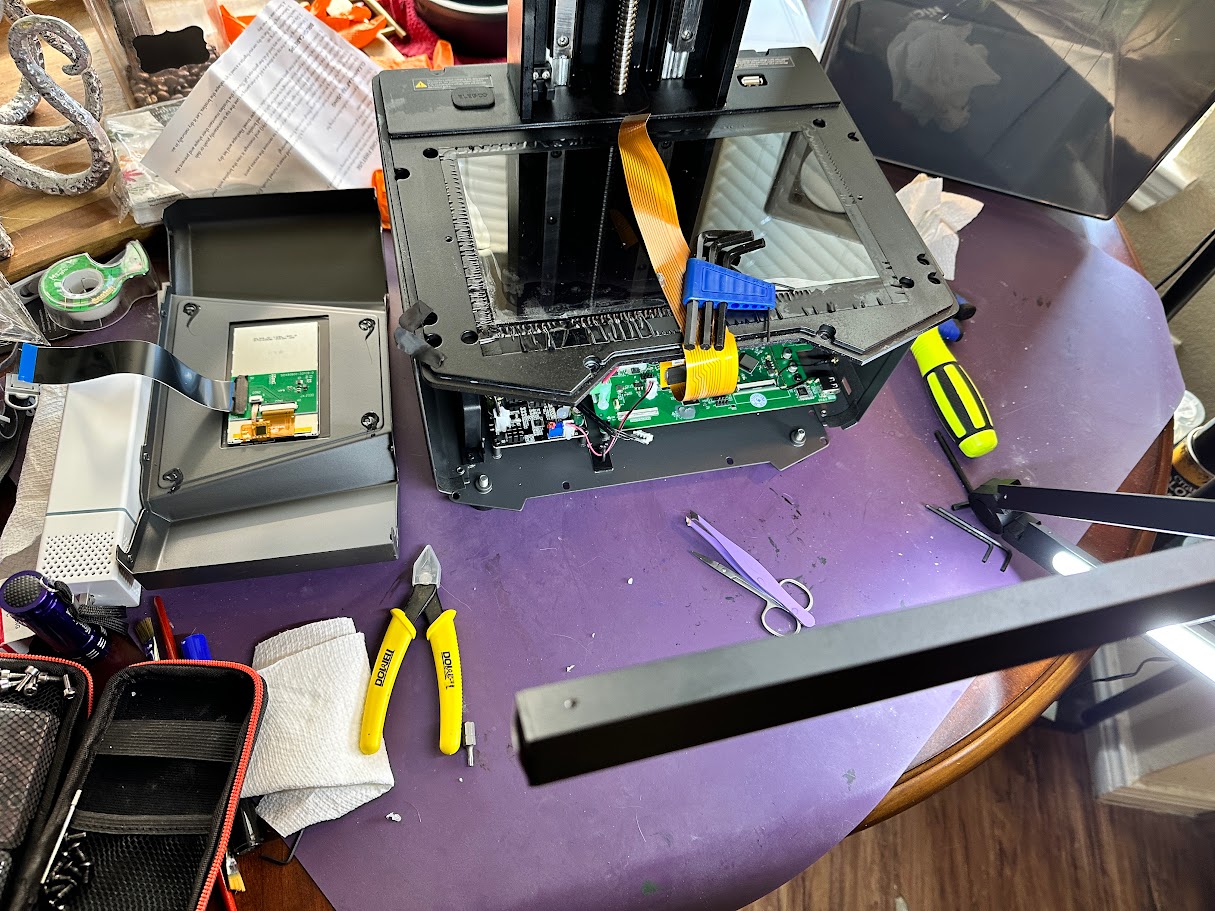
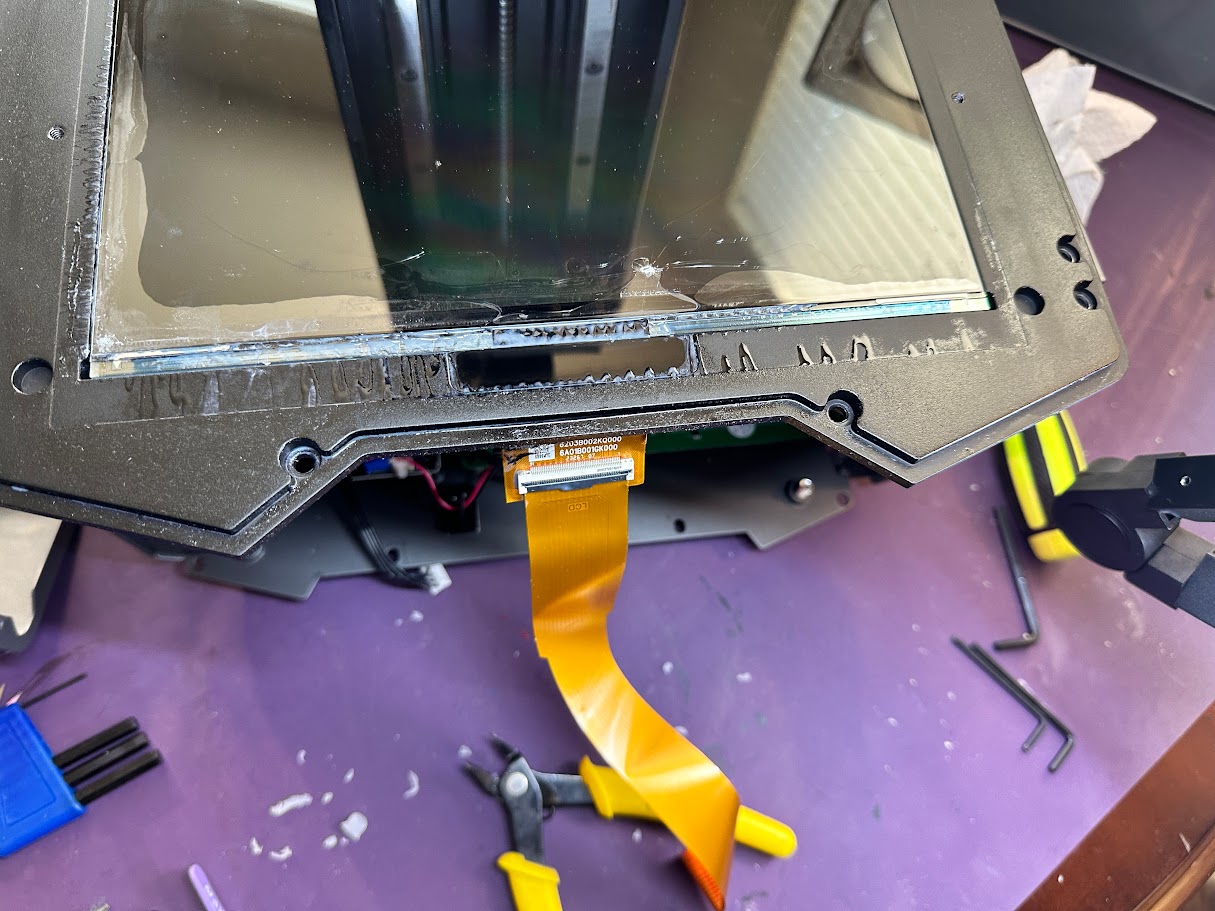
// BENCH TEARDOWN ARTIFACTS
// 02. IDENTIFIED FAILURE MODES
Z-Axis Backlash & Lead Screw Deviation
Micro-wobble in the lead screw stepper motor coupling led to non-uniform layer height compression during the first 50 critical base layers.
LCD Mask Fracturing & Light Bleed
Micro-fractures on the optical masking layer caused parasitic UV exposure, causing unexpected resin curing and localized layer delamination.
Vat Bed Coplanarity Drift
Factory leveling tolerances drifted over high-cycle operation, causing non-uniform suction forces across the FEP film during peel steps.
// 03. ENGINEERING EXECUTION & REPAIR
- Precision Mechanical Teardown: Disassembled the Z-axis drive assembly, optical deck, and vat mounting frame to inspect linear rails, lead screw threads, and mainboard interconnects.
- Optical Mask Replacement & Interface Inspection: Removed the damaged monochrome LCD panel, prepped structural mating surfaces, and seated a fresh masking array with zero FPC ribbon strain.
- Mechanical Tolerance Calibration: Re-seated the Z-axis motor mount with precision shims, eliminated lead screw axial play, and recalibrated bed level coplanarity to strict manufacturer tolerances.
// 04. VERIFICATION & RESULTS
Achieved 100% build success across multi-day stress runs with complex overhangs and fine feature resolution down to 25 microns.
Re-established uniform suction force across the entire build plane, completely eliminating edge-case detachment failure modes.